
Thermal imaging has gone way beyond its scope in the military and industrial sector and has become popular among photographers, inspectors, and those working outdoors. To make a decision on the quality of the thermal photography camera, you have to know how this technology works and what features are actually relevant to you. In this guide, all that you have to know before investing in one has been broken down.
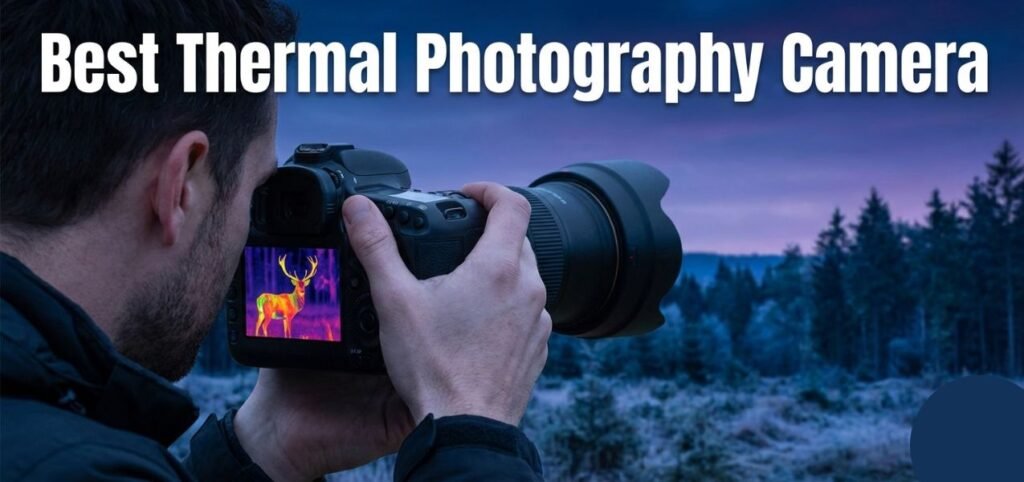
What Is a Thermal Photography Camera?
A thermal photography camera represents images that are taken as per the difference in heat instead of light. It does not use colors and shadows, but captures the infrared radiations released by objects and translates them into a visual representation. Warmer places seem brighter and colder places seem darker creating the possibility of seeing the things that cannot be seen with the naked eye.
This technology is priceless when it is absolutely dark, hazy, smoked or thick bushes. Thermal photography camera provides a whole new perspective in the world since it could be used in wildlife observation up to the construction of the diagnostics.
Key Factors to Consider When Buying
Resolution is the first thing to check when buying the finest thermal photography camera. Greater thermal resolution implies better images and better temperature readings. Simple models can be used on an entry-level, but it is even better to have more pixels when working with professionals.
Another important factor is called thermal sensitivity and is also known as NETD (Noise Equivalent Temperature Difference). A smaller NETD enables the thermal photography camera to record smaller temperature differences thus making more detailed images.
The field of view and lenses are important as well. An increased field of view is excellent in scanning vast areas whereas a smaller view is excellent in providing a good detail at distance. Not only a number of advanced models enable you to change the lenses; they can be used more flexibly.
Image Quality and Color Palettes
Thermal cameras in the market today provide different color options including white-hot, black-hot, ironbow, and rainbow. The palettes assist in bringing out variation of temperature within various settings. An excellent thermal photography camera enables you to change palettes quickly so that you can use it in various situations such as wildlife or electrical inspection.
There are also cameras that are a fusion of thermal and visible images. This quality improves clarity and simplifies the output, particularly when it is the first time when one is using a thermal photography camera.
Portability and Build Quality
Any size, and durability can also become important depending on your use case. Portable models are easy to carry, and they can be used in the field, but mounted systems can be installed on a vehicle or drone. Rugged thermal photography camera, which is water and dust resistant, is suitable in the outdoor and industrial settings.
One should not disregard battery life. Extensive hours of inspection or night photography will require a thermal photography camera which will take a few hours without recharging.
Software and Connectivity
There are high-tech programs that can dramatically increase the utility of a thermal photography camera. Such functions as temperature, image marking, and report creating are particularly significant to professionals. The wireless network permits the transfer of images to smartphones or computers with ease to get them analyzed and shared.
Some of them are even compatible with mobile applications, making your phone a control and viewing center of your thermal photography camera.
Best Use Cases of Thermal Photography Camera
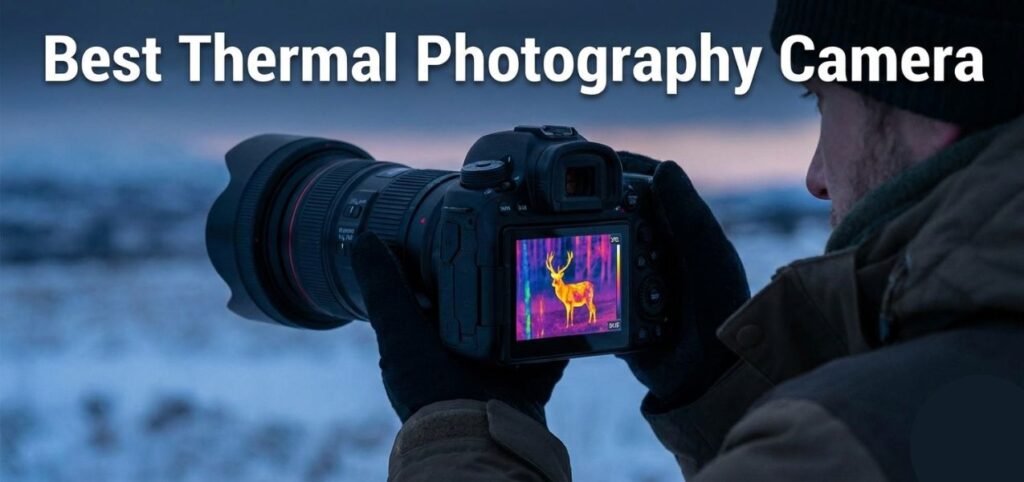
A thermal photography camera is versatile and hence can be used in many applications. It is used by wildlife photographers to study wildlife in their natural environment. It is used by home inspectors to identify insulation gaps, intrusion of moisture and electrical defects.
The use of thermal photography camera by search and rescue teams will help them trace the whereabouts of people during low-visibility conditions, whereas hobbyists can have fun with tracing thermal patterns in their normal surroundings.
Price vs. Performance
There is a large range of prices, including low-end entry-level devices and high-end professional equipment. The optimal thermal photography camera to you is one that is affordable but contains the features you really need. Novices will not need the high-level sensitivity, whereas professionals need to invest in precision, and reliability.
Knowing your major application will enable you not to pay more than necessary or buy a lesser thermal photography camera.
Final Thoughts
The choice of the optimal thermal photography camera is a matter of technology to use. With resolution, sensitivity, build quality, and software support, a camera that provides a valuable and stable performance can be found. The correct thermal camera will change your experience of capturing and interpreting the surrounding world regardless of whether you are a professional or an amateur.
I enjoyed every paragraph. Thank you for this.
Thanks for taking the time to break this down step-by-step.
Posts like this are why I keep coming back. It’s rare to find content that’s simple, practical, and not full of fluff.
Your content never disappoints. Keep up the great work!
You’ve done a great job with this. I ended up learning something new without even realizing it—very smooth writing!
I wasn’t expecting to learn so much from this post!