
Water is an important part of everyday life. It is used for drinking, cooking, cleaning and many other uses. But you ever wonder what the mix in your water is? Minerals, salts, and other dissolved substances, even in water, can’t be seen with the eyes. A small and useful device called a TDS Meter can be used to determine the quantity of these dissolved substances in water.
What Is a TDS Meter?
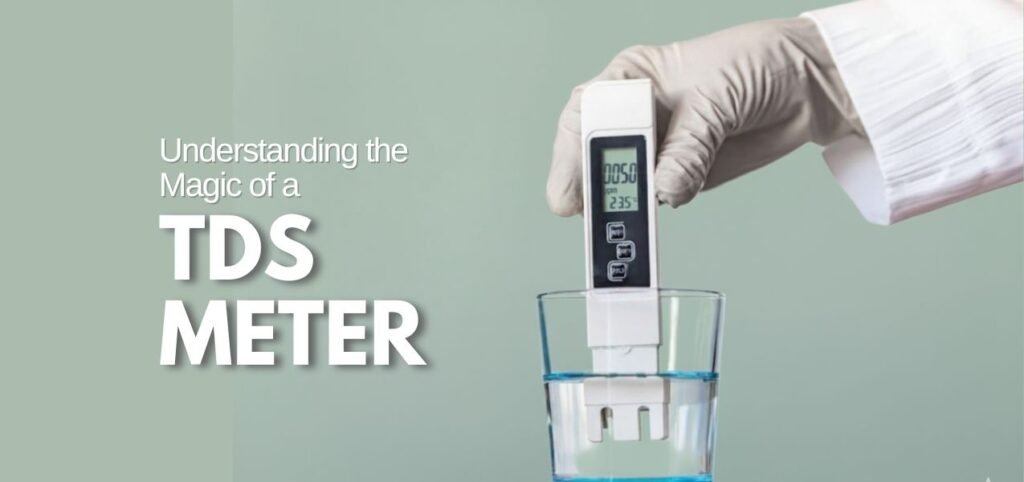
The TDS Meter is a digital instrument that measures Total Dissolved Solids (TDS) or commonly referred as TDS. These solids are minerals, salts, metals and other chemicals that are dissolved in water.
TDS typically is reported in parts per million (ppm). If the meter reads 200 ppm, it means that there are about 200 parts of dissolved substances for every 1 million parts of water.
A TDS Meter cannot detect all individual substances. Rather, it provides a general assessment of the material that is dissolved in the water. That is why it is a rapid and easy way to determine changes in water quality.
How Does a TDS Meter Work?
The working principle of a TDS Meter is based on the conductivity measurement of water. Water is not very conductive. When the minerals and salts are dissolved in water, however, it becomes easier for electricity to flow.
The conductivity is measured by the meter and the TDS level is estimated. The final result will then be displayed on the small digital display, typically in ppm.
Its quick reading makes it convenient for use in the homes, offices, laboratories, water stores and water filtration users.
Why Should You Use a TDS Meter?
A TDS Meter can be helpful for a number of reasons. The key advantage is that it can be used to easily compare water from various sources.
The tap water can, for instance, be tested, and then the water from a Reverse Osmosis (RO) filter can be tested. Typically, the TDS reading will be significantly lower than the untreated water if the RO is operating properly.
A TDS Meter can also be used to track changes with time. Suddenly the filtered water appears to have a higher reading than usual could be a cause to check the filter system.
Keep in mind, however, that a TDS reading is no indicator of safety or unsafety of drinking water. Some pollutants may not have an adverse impact on the TDS measurement.
How to Use a TDS Meter
- The use of a TDS Meter is generally very easy. Take a water sample in a glass or container, first collecting a clean sample. Switch on the meter and insert the meter’s sensor into the water.
- Unless directions specifically indicate otherwise, do not put it all in the water. Wait for the reading to become stable. The value displayed is an approximate TDS value.
- Once measured, lift up the meter and clean the sensor with clean water. Dry thoroughly before storing.
- Always use manufacturer’s instructions for accurate results.
Understanding TDS Readings
- A TDS Meter provides you with a number but understanding that number is also important. The TDS of water from various sources naturally varies.
- The higher the TDS in the water, the more minerals are present as dissolved substances, and the lower the TDS, the less. A higher number does not necessarily indicate a hazardous water. Likewise, when the number is low, it does not mean that the water is perfectly safe.
- What minerals and substances are present is important. Safety should be verified by water testing according to the requirements for drinking water.
- Therefore, do not rely on a TDS Meter as a full water safety test.
TDS Meter for RO Water Filters
- A TDS meter is used by many people with their RO water purifier. Most dissolved solids in water are removed by RO systems.
- Water samples before and after filtration can be used to check the ability of the filtering system to lower the TDS. But it’s important to perform regular testing to detect unusual changes.
- If reading continues to increase over time, it may be necessary to check or change filters as the manufacturer suggests.
- Be sure to not change out filters just from one TDS measurement. Also filter condition and age, water use, and manufacturer’s recommendations should be taken into account.
Benefits of a TDS Meter
There are a number of benefits of using a TDS Meter. Small, light and typically easy to use. Most of the models give the reading within a few seconds and therefore it saves time to send each of the samples to the laboratory.
It can also be used for comparing water sources and checking the efficiency of the filters.
The other benefit is cost. Basic digital meters are typically inexpensive and therefore suitable for homeowners who wish to monitor water usage without a lot of hassle.
Choosing the Right TDS Meter
When purchasing a TDS meter, ensure that you buy an easy-to-use and easy-to-read model. It’s useful to have a digital display that is clear. Certain models will give a temperature reading and/or automatic temperature compensation.
Another significant aspect is accuracy. Select a trusted brand and item with good reliability and research if the item can be calibrated.
A protective case and a replaceable battery are other features that can be helpful if you use the meter frequently.
Final Thoughts
TDS meter is a handy instrument to measure the content of dissolved matter in water. It can be particularly useful for tracking tap water, filtered water and RO systems.
But it’s essential to know its bounds. A TDS reading will not give you information on the specific substances in the water and does not replace professional water testing.
If used properly, a TDS meter can provide you with valuable insight into your water quality changes and monitor your filtration system. It can be an easy addition to your home water-quality routine with regular checks and maintenance.